The Problem
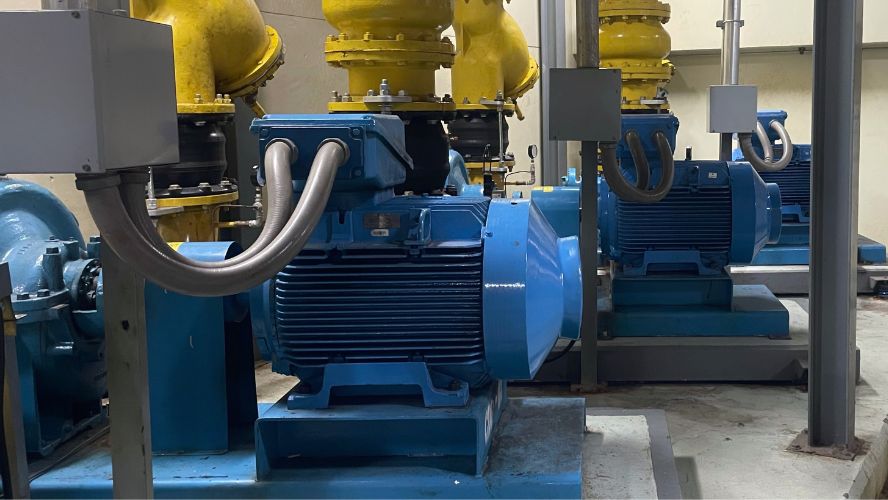
A local manufacturer ran a single 18.5kW Cooling Water Circulation Pump on site which operated continuously 24 hours per day, 365 days per year. The business needed to reduce its energy consumption and this pump was identified as a possible target for Energy Efficiency Savings. The business owner was concerned that changes to the pump application would affect processes and so Sentridge Control offered to carry out testing to alleviate any concerns.
Sentridge’s Solution
A temporary Inverter Drive was installed and readings taken to measure the impact of adding a variable speed drive to the pump application.
Without affecting the process, initial results show that there was approximately a 50% saving by reducing the speed of the pump by 20% during non-production times.
These initial results were very positive and should provide excellent payback times on the drive investment of well under one year.
To ensure the maximum savings are realized Sentridge recommended that the process should be automated so that the speed of the pump can be reduced during non-production times. This could be done on the Drive using the in-built time clock. An override circuit could also be implemented as a backup provision.
The Full Story
A manufacturer running a single 18.5kW Process Cooling Water Circulation Pump continuously on site needed to reduce energy costs and required an energy saving solution that would not affect current processes.
Sentridge were confident that the installation of an Inverter Drive would achieve the desired results; however after taking on board the concerns about the effect on processes, we suggested installing a temporary Inverter Drive to test the application, measure energy savings and ensure that operating processes were not affected.
Initially it was proposed to simply turn the speed of the pump down by 10% and monitor the results, but concerns were raised about the affect this might have on process or machinery. These concerns were discussed at length during our site visit and it was decided that further additional feedback signals may be required to overcome these issues and process checks should be made during trials.
However, it was agreed that the installation of the temporary inverter could go ahead, but this was to be left running at a fixed speed of 50Hz. Without any affect on processes, initial results showed that there was approximately a 50% saving by reducing the speed of the pump by 20% during non-production times.
We understand that the current production times are from 7am – 4pm Monday to Thursday. This means that there is only 36 hours of actual production time out of a possible 168 hour’ week. The plant is only operational for 22% of the time and therefore it should be possible to reduce the speed during the non-operational times without affecting the process.
Ensuring water quality and avoid stagnation the pumps can continue to run at a reduced speed during non-production time and maintain a minimum circulation requirement.
During the installation the following Power vs Speed reading were taken and these are recorded below.